

Why AI Has Ended the Reign of the Website and What Comes Next
For the past three decades, the website has served as the centerpiece of digital marketing and customer engagement. Brands invested heavily in SEO, paid search, and content strategies designed to drive traffic to a single hub where relationships were forged and revenue was generated. However, the rise of artificial intelligence has fundamentally upended this dynamic. What worked in the Web 2.0 era is now obsolete, and businesses that fail to adapt risk losing relevance entirely.
AI Didn’t Kill the Website, It Killed Its Dominance
Initially, websites were indispensable because they were the gateway between consumers and information. Marketers spent years mastering search behavior, optimizing every page to secure valuable real estate on the first page of Google search results. In turn, traffic flowed predictably and could be nurtured through a known funnel, from awareness to conversion.
However, since the introduction of advanced AI models like ChatGPT in 2023, consumers have shifted away from traditional browsing behavior. Today, more users rely on AI to discover, compare, and decide what to buy, often without visiting a website at all. AI systems synthesize answers across the web, effectively collapsing the classic funnel: instead of seeing ten blue links and choosing which site to visit, users ask a question and receive a concise, AI-curated answer. Consequently, traditional website sessions and organic traffic metrics are in decline.
This trend isn’t hypothetical. Multiple reports show significant drops in search traffic, even among major platforms that historically dominated organic discovery. As consumers increasingly rely on AI, brands that are overly dependent on websites for discovery and engagement are losing touch with their audience.
AI Intermediates the Relationship: The Rise of the Conversational Front Door
In practical terms, AI sits between your brand and potential customers. It doesn’t simply link out to your web pages, it interprets, summarizes, and recommends. This shift means that AI determines not just if a user sees your content, but how they understand your value before they ever visit your site. Consequently:
- AI becomes the new acquisition layer
- The website shifts to being supporting infrastructure
- Direct customer relationships migrate to other platforms and increasingly, to mobile environments where brands can own engagement after discovery.
In other words, the website no longer controls the first customer touchpoint. Instead, AI does.
Why Mobile Now Matters More Than Ever
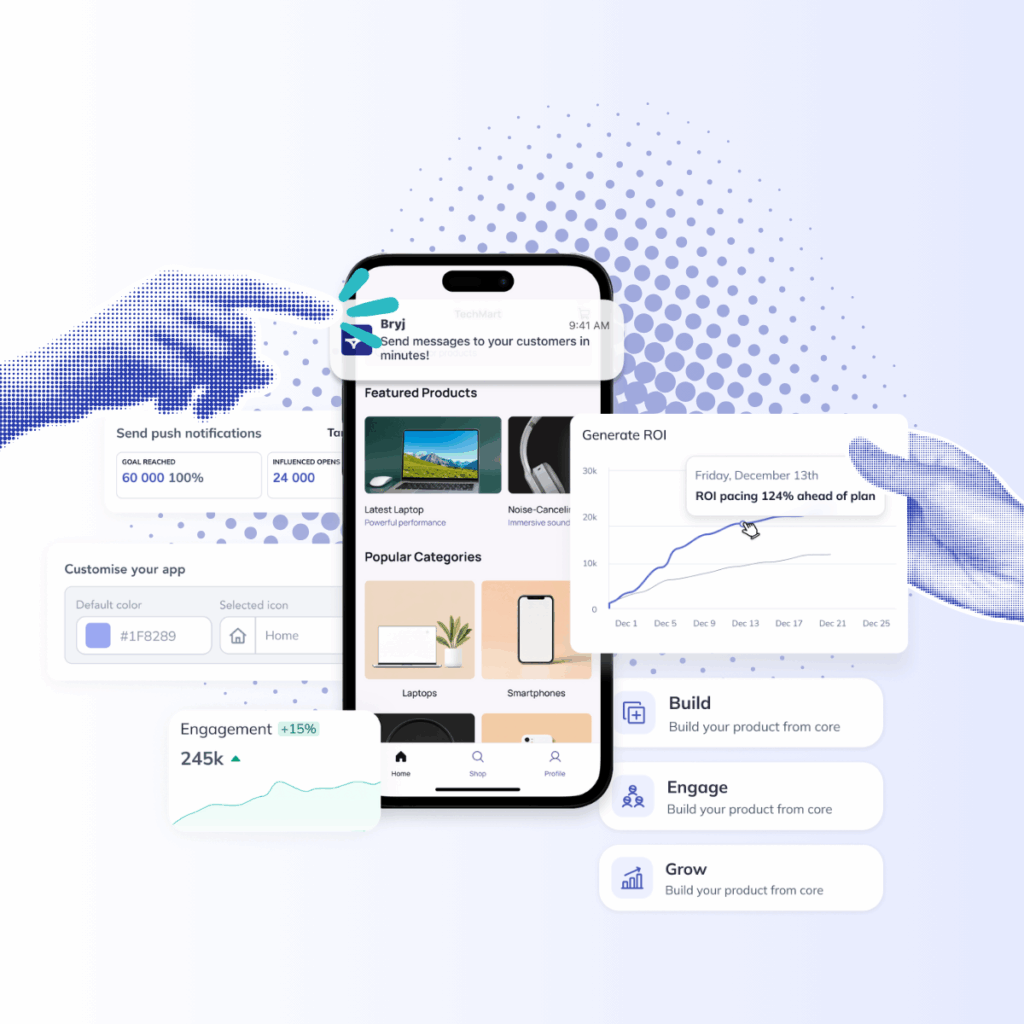
Because AI handles discovery and first interactions, often without sending users to a brand’s web domain, ownership of the customer relationship has to shift elsewhere. In this context, mobile applications are uniquely positioned to reclaim that relationship. Unlike web pages, mobile apps:
- Provide persistent identity and first-party user data
- Enable direct customer engagement through notifications and personalization
- Create habitual usage patterns that strengthen loyalty and lifetime value.
Mobile experiences are not just responsive versions of websites; they represent a strategic platform for brands to nurture ongoing engagement. When AI decides what a user buys, the app is where the actual ownership and repeat interaction happen.
The Website’s New Role
Importantly, this analysis doesn’t mean the website is dead, rather its role is evolving:
- Websites are now supporting assets, not engagement centers
- They serve primarily as repositories of depth, authority, and structured information that AI can reference
- They help validate brand credibility once a user, or an AI, decides to explore further.
In this AI-mediated ecosystem, the metric of success changes. Website metrics like page views and search rankings become less meaningful in isolation. Instead, outcomes such as how often AI cites your content, how well that content aligns with user intent, and whether deep domain expertise is communicated effectively matter most.
What Brands Should Do Now
To thrive in this new era, technology leaders and marketers should pivot in two key directions:
1. Invest in AI-aware discovery strategies
Optimizing for AI discovery, sometimes called Generative Engine Optimization (GEO), means structuring content so it can be meaningfully consumed and referenced by AI models. This goes beyond classic SEO to include clear taxonomy, depth of information, and alignment with user questions.
2. Focus on owned experiences for engagement
Beyond initial discovery, brands must prioritize experiences that retain users and foster ongoing relationships. Mobile applications, personalized platforms, and direct engagement channels are where this happens. Only when brands own this space can they convert AI-mediated discovery into loyal users and repeat customers.
Conclusion
AI hasn’t destroyed the web. Instead, it redistributes influence across new layers of the digital experience. As AI governs discovery and early decision-making, brands must shift from optimizing for clicks to designing relationships. Websites remain valuable, but not as the central hub, rather, as part of a broader, more distributed ecosystem where mobile and AI interfaces define the customer experience.