AI Killed the Website (Deep Dive)

Hi! I’ve been quieter here than usual.
Over the past couple of months, I stepped away from writing to focus on building Bryj. I joined for one reason: to help democratize the building of mobile apps.
I learned the hard way how difficult and expensive mobile can be. While leading Outlook Mobile at Microsoft, I saw firsthand what it took to build, scale, and maintain a world-class app. The teams, the cost, the complexity. Most brands don’t have the technical experience, and could never afford it. For a long time, that was fine, because a website was enough.
That’s no longer true.
AI has changed how consumers discover, decide, and buy. The website is no longer the center of the relationship. And that makes a mobile app no longer a “nice to have,” but an existential requirement for brands that want to survive the next decade.
This piece explains why, and why now every brand needs a mobile app, not just the few who can afford to build it the hard way.
How AI Changed Everything for Marketers
Since the web started to gain traction for retailers 30 years ago, the website has been the center of gravity for marketing.
It’s where brands told their story. Where campaigns landed. Where traffic converted. Where revenue was generated, and where attribution lived.
Marketing strategy assumed one core truth: If you could get someone to your website, you controlled the relationship.
Since ChatGPT burst onto the scene in 2023, that assumption is no longer true. Not because the website disappeared, but because AI stepped in between consumers and the web.
In the “old days”, marketers worked hard on Search Engine Optimization and paid search advertising to ensure the gatekeeper of the web, Google, would put their website at the top of the first page of consumer search results. The “blue link” on Google was the top of the funnel. Once marketers got that secured, they could work their campaigns to move prospects through their funnel.
Today, consumers aren’t going to Google as much. According to a Datos/SparkToro report, Google searches are down 20%.The phenomena is worldwide, but best exemplified by the impact on Hubspot, who saw a 70-80% drop in organic traffic between 2024 and 2025. The drop in organic traffic was noted by Hubspot’s CEO Yamini Rangan, who stated on LinkedIn, “If HubSpot, with one of the best SEO teams in the world, can experience this, none of us are safe”.
There are two ways marketers can respond to this phenomena, because it’s only going to get more pronounced.
1. You can invest in GEO – Generative Engine Optimization
2. You can invest in a mobile app
Everyone is scrambling to implement GEO, but it’s a moving target. If you think optimizing for Googles PageRank algorithm was hard, optimizing for discovery by an LLM whose creators don’t even know how it works is going to take a lot of investment, iteration, and learning. Read, time and money.
A mobile app is how brands reclaim the relationship, owning identity, engagement, and loyalty in a world where AI mediates everything upstream. It also enables brands to meet consumers where they are – on their phones!
AI changed who owns the customer moment
How did we get here? And how did we get here so quickly? Traditionally, marketing worked like this:
1. Capture attention (ads, SEO, social)
2. Drive traffic to your site
3. Educate, persuade, convert
4. Retarget and repeat
Your website was the hub, and every dollar you spent was designed to push people toward it. AI collapses this entire system.
Today, consumers increasingly ask AI what to buy, which brand is best, to compare options, and to ultimately ask AI to take action → buy! Consumers don’t browse, don’t research, don’t click ten tabs. Consumers ask, and the AI decides. And when AI resolves the decision, your website never gets a chance to do its job.
AI disintermediates brands from consumers
As AI now sits between your brand and your customer, it is a filter you have no control over. AI is not just providing your customers with a link to your products. It is providing your customer with a narrative, a perspective, a feeling even.
AI has converted the pass-through sign post that was a Google search result and turned every interaction into a conversation about your brand. A conversation you are not in!
When consumers stop browsing and start asking, traffic thins, brand recall weakens, attribution disappears, and differentiation shifts upstream into the AI.
The website doesn’t vanish, but it becomes supporting infrastructure, not the center of the relationship.
So the real question becomes unavoidable.
If the website is no longer where the customer relationship lives… where does it live?
Learn From Microsoft’s Mistake
For many marketers, a “mobile first” experience misses the point. They’ve been trained by platforms like SquareSpace and Substack that it’s just a responsive design of your website and a better checkout UX to fit on a smaller screen.
I learned this lesson first hand. It’s the same mistake Microsoft made when they developed their first Outlook Mobile application. They thought they could just shrink down the functionality of Outlook desktop into a smaller interface and you’re done. Wrong. That app flopped.
After the acquisition of Acompli, we scrapped the old app and rebranded Acompli as Outlook mobile. Within a year, we went from zero to 30M monthly active users.
At the core of this decision is a grounding principle. Mobile isn’t an afterthought. It’s the center of your digital go-to-market and monetization strategy.
What Mobile Gets You
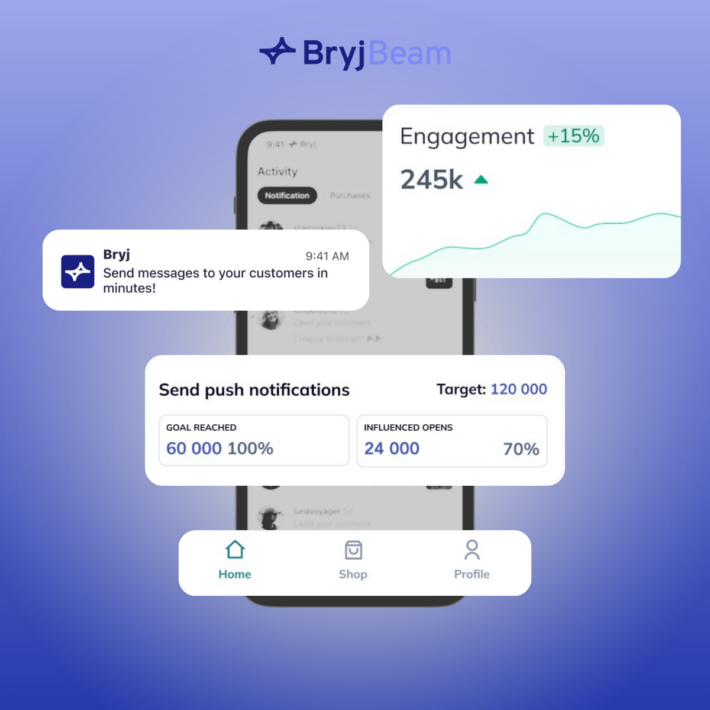
A mobile app gives you a known customer, persistent identity, first-party data, and direct reach and connection. You’re in your customers pocket able to reach out, connect, and build a relationship on your customers terms and in a way that serves your brand. Through push notifications, personalization, saved preferences, and habitual engagement.
These aren’t features. They are relationship control.
In a world where AI mediates discovery, the only way to protect brand value is to own the relationship after the decision is made.
That ownership lives on mobile.
AI becomes the acquisition layer – Mobile becomes the brand layer
All of this requires a change in mindset. Increasingly, AI will influence what consumers consider, recommend where they buy, provide a shortcut comparison, and automate decisions.
You cannot outbid an AI. You cannot out-optimize a prompt. You cannot funnel-hack a conversation you don’t participate in.
But you can own the experience that follows. With your mobile app.
Your mobile app will anchor your brand identity. It will create loyalty through interactions and the building trust. Your app will help create engagement and purchasing habits. All of which will compound as lifetime value – for you and your customer.
All of this goes to say that the future marketing stack looks like this:
- AI → discovery and recommendation
- Mobile → relationship, loyalty, and repeat value
- Web → supporting surface, not the core
Web-first marketing optimizes for clicks. Mobile-first marketing optimizes for trust
This distinction between clicks and trust is critical. Web-first marketing is an exercise in statistics and the power of large numbers. How do we get more traffic? How do we improve conversion? How do we lower CAC?
A mobile-first marketing person has to be more user-centric. Building the intangibles that will convert into revenues over time. Why should a customer stay connected to us? What ongoing value do we provide? How do we earn a permanent place in their behavior?
What this means for marketing leaders
This shift forces a rethink of what marketing success actually means. You have to go beyond sessions, page views, CTR, conversion rate, etc.
You need to think in terms of repeat engagement, owned audience, first-party signals, lifetime value. Monthly active usage and engagement within your mobile app funnels.
The old metrics don’t go away. You need to build a model above that and start thinking in the way mobile app developers have for a long time.
The brands that win will own the relationship layer
AI won’t replace brands. But it will commoditize the ones that don’t own their customer connection. The brands that will survive and thrive reduce dependence on rented attention (ads and search sponsorship), invest in direct, owned experiences, and treat mobile as a strategic asset, not a technical project.
In the AI era, this means that websites will inform users and AI LLMs. AI will decide, but it will be a mobile experience that will connect your customers to you, your product, and your brand.
That’s the new reality.
AI didn’t kill the website – It ended its reign
Your website still matters. But it no longer defines your brand. AI now controls discovery. Mobile must control the relationship.
If your marketing strategy is still web-first, you’re optimizing for a world that no longer exists. And your customers have already moved on.