The Best of Hybrid and Native Apps is a No-Code Solution, Mobile App Solution
The Digital Shift Has Stalled at the Browser
Over the past 20 years, every company — no matter the size or industry — has moved online. Yet most digital strategies stopped at the browser. The result? Clunky desktop and limited mobile web experiences that feel outdated.
What’s missing are the multi-experiential features that users expect — privacy, security, personalization, biometrics, voice, and smooth cross-device performance.
“The browser will always have a place,” says Lawrence Snapp, CEO of Bryj Technologies, Inc. “But brands that want to move from transactions to relationships need full-featured apps. You can’t just wrap your website into an app and call it done. The app must deliver more value to create a real connection.”
Why Browsers Fall Short
The first browser appeared in the 1990s. Since then, browsers have changed little. They were designed as one-size-fits-all tools for basic interactions.
Modern users want more. They expect experiences that adapt to their devices — with speed, intelligence, and personalization.
Apps can do what browsers can’t. They use features like geolocation, translation, native notifications, and camera access. They offer smoother design and faster response times.
“When Steve Jobs launched the App Store, he thought browsers would evolve,” Snapp says. “Instead, apps became a trillion-dollar global channel, while browsers stayed the same.”
Cloud computing now connects personal app experiences across all devices. New operating systems keep adding app-only features, like AR and NFC payments, leaving browsers even further behind.
The Power of Full-Featured Apps
Full-featured apps create personalized, one-to-one relationships across sessions, devices, and even life stages.
“Security, privacy, and convenience build trust — something browsers can’t deliver,” Snapp explains. “Apps drive higher lifetime value, lower acquisition costs, and stronger engagement.”
Apps also work offline, load faster, and feel more natural to use. They use built-in intelligence — such as Face ID and secure payments — to create safer, smarter, and more personal experiences.
Hybrid Apps: A Shortcut with Limits
Hybrid apps extend web experiences into an app shell. They’re faster and cheaper to make, but they rarely perform as well as native apps.
“Hybrid apps are easy to build, but they sacrifice security, privacy, and performance,” Snapp warns.
They often mimic websites with minimal extra functionality. They lack deep integrations, analytics, and smooth design. Many app stores reject them because they don’t feel different enough from browsers.
The Native Dilemma
Native apps deliver the best experience and design — but at a high cost. They require separate codebases, multiple teams, and constant updates to stay in sync.
“If you have three codebases, you have three teams that will never stay aligned,” Snapp says. “Multiply that across countries and costs explode.”
Native apps also need specialized tools for analytics and engagement, which increases complexity.
Bryj: The Best of Both Worlds
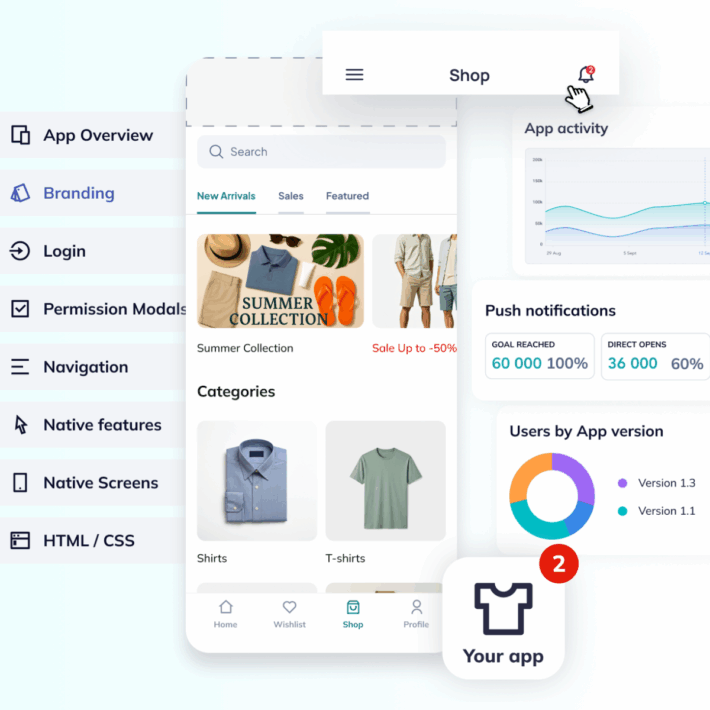
Bryj eliminates these trade-offs. It combines the power of native apps with the flexibility of hybrid development — without the drawbacks.
“Bryj exists to make this simple,” Snapp says. “A no-code platform that handles creation, integration, analytics, and engagement — all in one subscription.”
With Bryj, companies use a single codebase that stays synced across platforms. They also gain built-in engagement and analytics tools.
Global brands like Saks Fifth Avenue, Salesforce, and Microsoft have used Bryj to launch secure, full-featured apps quickly.
“Bryj fills the app gap,” Snapp says. “It’s 10x faster, smarter, and more cost-effective than building in-house or through agencies. It’s apps-as-a-service that reduces cost, time, and risk.”